Lilac Realty
Designing clarity for a high-trust, high-emotion purchase.
Role:
Solo UX Designer, Content Strategist
Timeline:
Spring 2025
Skills:
Design Systems
Information Architecture
UX Writing
UX Research
Tools:
Placester
Canva
Overview
Challenge
Approach
Design
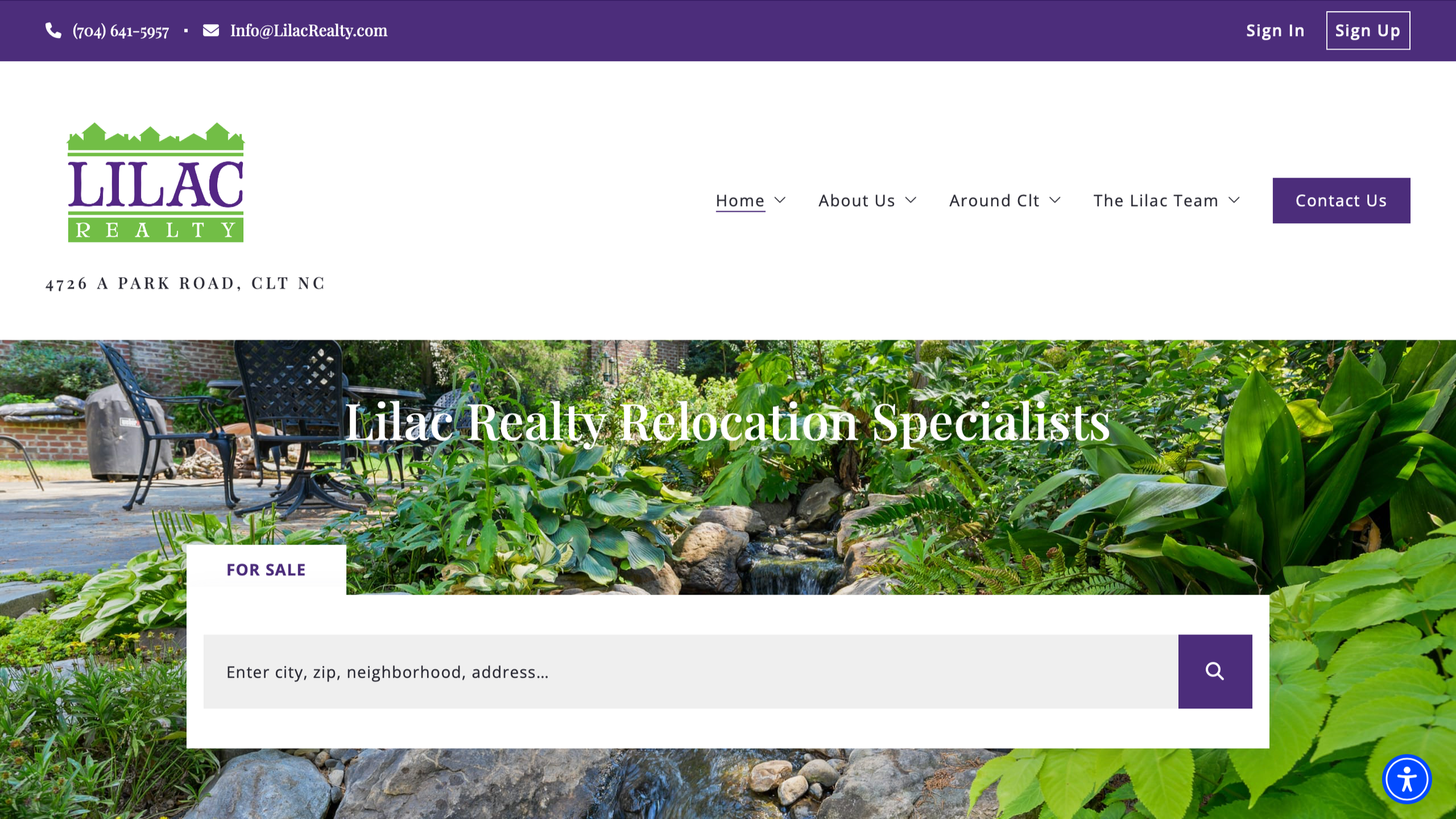
Lilac Realty is a residential real estate brokerage based in Charlotte, NC, supporting buyers and sellers through one of the most personal, high-stakes decisions they’ll make. As the business grew, their website needed to better support user trust and navigation, especially for clients who are relocating.
Lengthy navigation created cognitive overload
Content lacked hierarchy and clarity
Users struggled to quickly find services and team information
Information Architecture
UX Writing
Wireframing
Accessibility checkpoints
Consolidated navigation from 9 tabs to 5
Grouped secondary content under clearer categories
Designed layouts aligned with brand and user needs
Finalized brand guidelines


Navigation Bar Upgrade
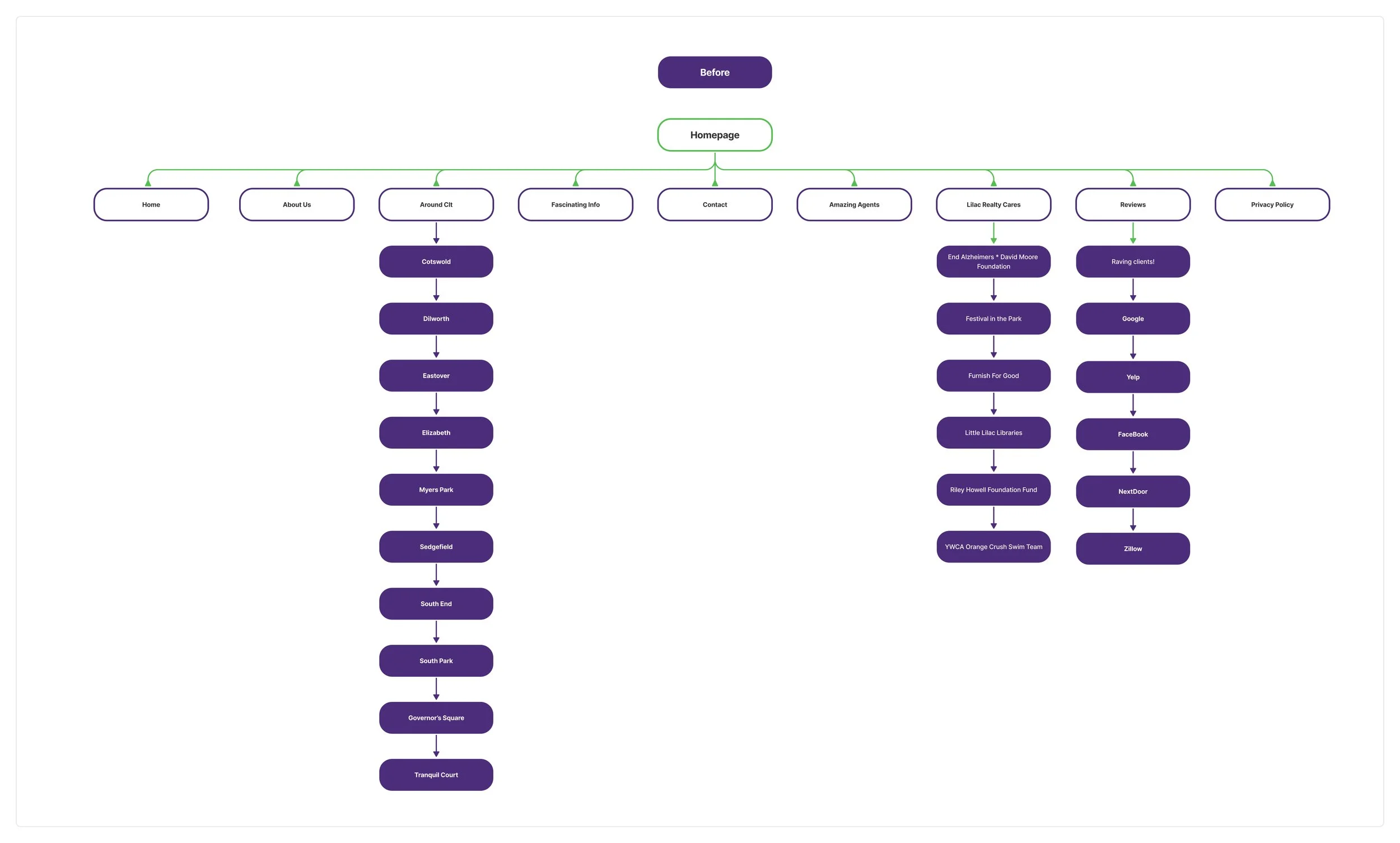
The original navigation caused unnecessary cognitive load during a high-stakes decision process.
Solution:
Reduced primary navigation from 9 tabs to 5 core categories
Consolidated secondary pages into clearer subcategories
Prioritized user journey for buyers, sellers, and relocators
The simplified structure allows users to quickly understand Lilac Realty’s services and their unique market positioning, and then explore listings without feeling overwhelmed. This supports faster orientation and greater user confidence.
UX Writing Component:
Rewrote navigation labels to be more accurate and user-centered Example: “Amazing Agents” -> “The Lilac Team ” to include non-agent staff
Defined a consistent voice and tone across navigation and landing pages: approachable, professional, community-focused
Crafted UX copy that balances concise intros with detailed supporting content
Results
Improved clarity and ease of navigation through streamlined information architecture
Reduced friction and reinforced new and returning user trust through thoughtful, intuitive language
Strengthened brand trust with a warm, informative voice
Enabled users to explore information more efficiently which simplified decision-making